Patient Monitoring & Remote Care

Connected care platforms for hospitals that need clinical evidence before capital approval.

Ge Healthcare helps value analysis, biomedical engineering, and clinical operations teams evaluate monitoring, home-care, and infection-control programs with documentation that is ready for service planning, cybersecurity review, and procurement governance.

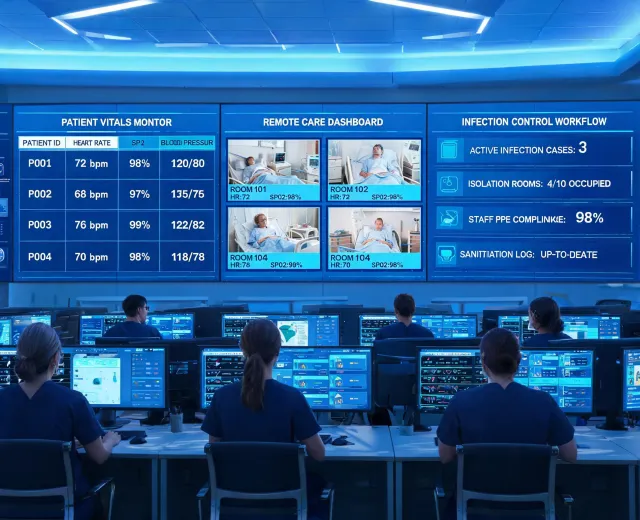
Connected patient monitoring command center
Procurement evidence tabs

Structured data for value analysis and biomedical review.

Monitoring Network

Interface
HL7 v2, FHIR R4 observations, waveform export planning
Alarm governance
IEC 60601-1-8 priority mapping and alarm-fatigue mitigation workflows
Cybersecurity
SBOM, mTLS endpoint checklist, CVE triage window, SIEM integration notes
Home Care Rollout

Connectivity
Bluetooth LE pairing, cellular fallback, caregiver app enrollment
Training
Teach-back checklist, multilingual quick guides, discharge-bundle documentation
Reimbursement
HCPCS review support, prior authorization notes, payer evidence package

Infection Control

Traceability
UDI, lot history, recall sweep, replenishment cadence
Sterility
Packaging validation, shelf-life statements, storage controls
Operations
Par level model, SPD handoff, procedure pack utilization dashboard
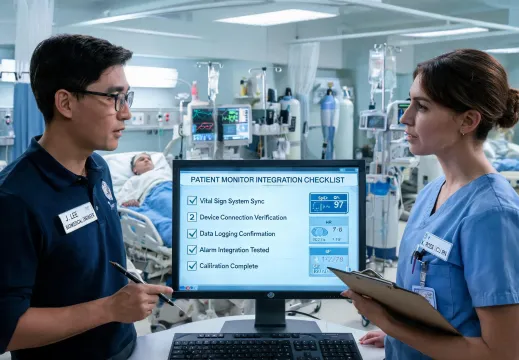
Biomedical engineer reviewing monitoring integration
Integration assurance

Configured for the systems hospitals already run.

Deployment packages describe network segmentation, role-based access, interface behavior, and device uptime expectations. The material is written for biomedical engineering teams that must defend every connected endpoint before go-live.

Remote care discharge planning session
Hospital-to-home continuity

Remote care workflows that start before discharge.

Home care and rehabilitation programs can be evaluated with caregiver training assets, patient adherence dashboards, escalation playbooks, and connectivity fallback notes for rural or high-risk populations.

Infection control supply traceability review
Traceable consumables

Consumable programs documented for recall response.

Infection-control products are organized around lot history, storage rules, procedure-pack utilization, and replenishment cadence, giving supply chain leaders a clearer view of recurring cost and operational risk.

99.5%target connected-care uptime reviewed by service tier
24hcybersecurity triage window for critical endpoint notices
4hurban field-service escalation target for premium coverage
FHIR R4observation workflow planning for remote care programs
Clinical settings

Use cases mapped by care environment.

Connected ICU

Alarm governance, waveform export, telemetry visibility, and escalation paths for high-acuity teams.

Home Health

Discharge kits, caregiver education, remote vitals, adherence tracking, and payer documentation.

Ambulatory Care

Compact monitoring and consumable workflows for clinics that need fast replenishment and low IT burden.

Long-term Care

Routine monitoring, infection-control packs, staff training, and recall-ready lot tracking.

Health System Supply Chain

GPO alignment, service tier selection, TCO models, and standard documentation for committees.

"The strongest Ge Healthcare proposal is not a brochure; it is a clinical, service, cybersecurity, and cost file that lets a hospital committee make a defensible decision."

Anonymous value analysis chair, multi-site health system

Capital review support

Send your care setting and installed-base priorities.

  • Monitoring network architecture notes and interface assumptions
  • Remote care rollout plan with caregiver training and escalation paths
  • Infection-control sourcing review with UDI and recall documentation