Patient Safety First
Risk files, alarm behavior, electrical safety, privacy, and post-market feedback are treated as operating disciplines, not as separate paperwork attached at the end of a project.
Our work centers on monitoring, remote care, rehabilitation, and infection-control programs that must operate inside regulated clinical environments. The company voice is intentionally evidence-led: decisions are framed through risk management, service readiness, human factors, cybersecurity, and measurable operational performance.
Early device programs established formal design records, service manuals, and field feedback loops so biomedical teams could support complex equipment beyond the initial installation.
Quality operations were aligned with medical device QMS expectations that later became central to ISO 13485 review, supplier control, complaint handling, and design change governance.
Monitoring workflows grew from bedside visibility toward central stations, alarm governance, and cross-unit operational review, creating the foundation for modern clinical command centers.
Care teams increasingly required interface planning, network segmentation, and documentation that allowed devices to participate in EMR, telemetry, and reporting workflows without weakening privacy controls.
Procurement decisions began requiring SBOM, vulnerability response, endpoint hardening, and remote access controls before connected care systems could be approved for clinical networks.
Hospital-to-home programs demanded device adherence metrics, caregiver education, reimbursement support, and escalation paths that bridge inpatient, home health, and long-term care settings.
Risk files, alarm behavior, electrical safety, privacy, and post-market feedback are treated as operating disciplines, not as separate paperwork attached at the end of a project.
Claims are framed around measurable performance, defined service responsibilities, interface assumptions, and reviewable data that clinical and procurement committees can challenge.
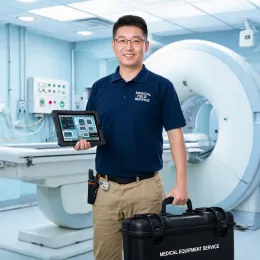
Connected devices remain valuable only when staff training, parts logistics, cybersecurity patches, and service events continue after installation and across ownership cycles.






Bring a service, cybersecurity, monitoring, or home-care question to a team that can answer in the language of clinical operations and regulated procurement.
Schedule a Conversation